Cleaner air, healthier homes
Replacing polluting fuels like charcoal and firewood links waste segregation to cleaner air and healthier household living.
Mazilinda · Pillar 02
Household biogas and solar solutions for cleaner cooking, healthier homes and lasting savings for families.
Talk to us about clean energy Discover the household loop01 / Household biogas
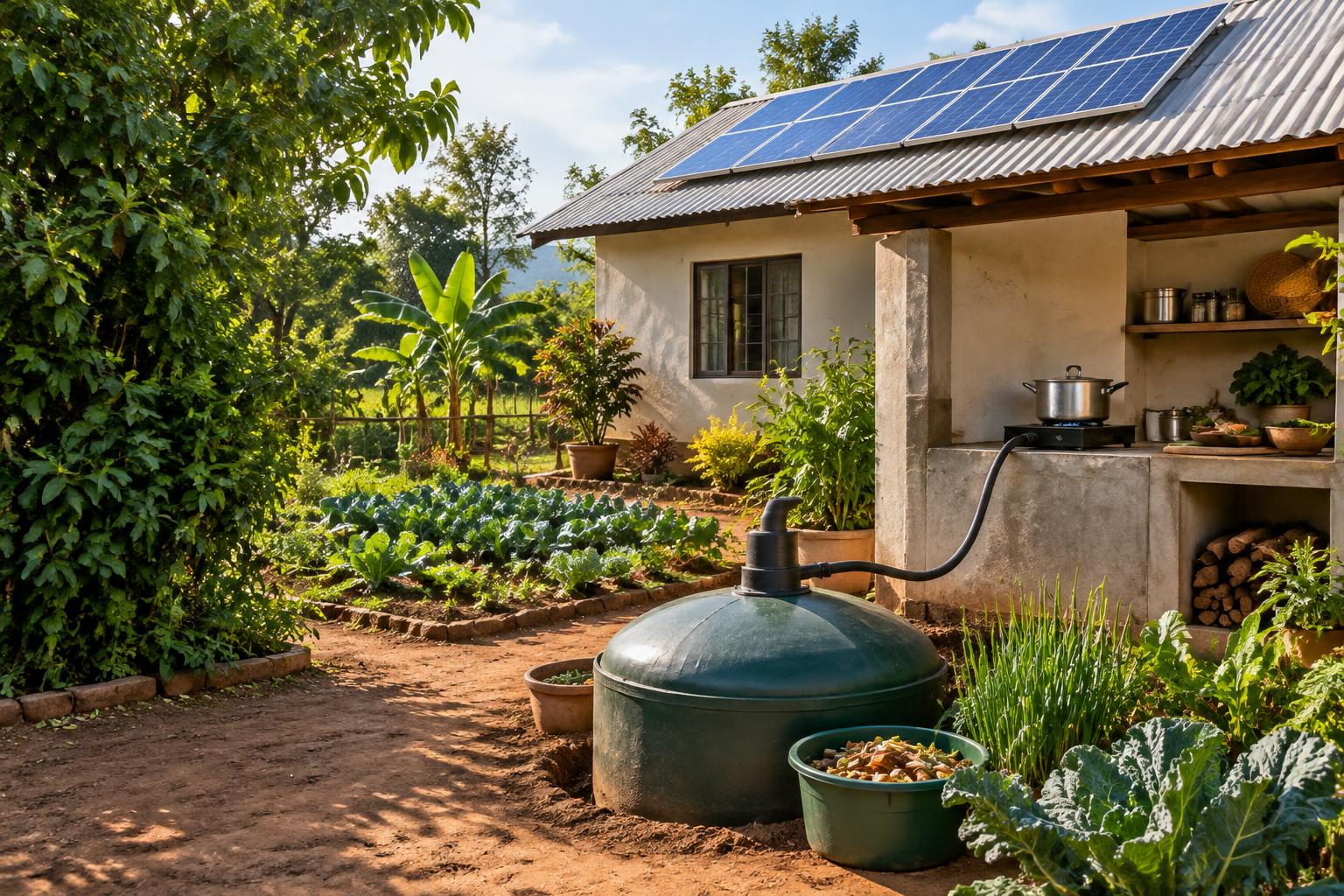
Organic waste, such as kitchen and food scraps, is sorted at source and fed into biogas systems. What comes out is valuable twice over: clean cooking fuel for the home and nutrient-rich slurry that restores soil.
Keep kitchen and food scraps separate from plastics and other waste.
Sorted organic waste goes into the system, where it breaks down to produce biogas.
Use the biogas for household cooking in place of charcoal and firewood.
The nutrient-rich slurry supports soil restoration, closing the loop.
The difference at home
Replacing polluting fuels like charcoal and firewood links waste segregation to cleaner air and healthier household living.
Using organic waste for biogas cuts the methane released when those same food scraps are left to rot in dumpsites.
Turning everyday organic waste into cooking fuel lowers household energy costs while returning valuable nutrients to the soil.
02 / Household solar
Solar solutions complement biogas by giving homes a clean power option. Together, they connect everyday waste segregation with a cleaner, healthier and more affordable way to live.
Organic waste becomes fuel for the kitchen and nutrients for the land.
Energy from the sun provides a clean power option alongside biogas.
Looking ahead
Long-term exploration
In the long term, we want to explore options for tapping energy from incinerators to generate electricity or provide heat for boilers.
Start a conversation
Connect with Mazilinda about household biogas and solar solutions.